One ritual hasn't drifted, even in a season of searching: drinking really good coffee. It's a small morning practice, and part of a daily commitment to making optimism a choice. It's also a quiet thread back to the producers, pickers, mill workers, exporters, port crews, importers, and roasters who carry it around the world.
Coffee may be one of the most traveled products in our daily lives. Most mornings, origin feels impossibly far away. Every so often, something makes that distance collapse.
This month, two coffees stopped me in my tracks. Both were Colombian, and both were built around mango co-fermentation. I brewed one that was roasted in Florida. I'd reached for it because another, roasted in Canada, had found me the week before. Small world.
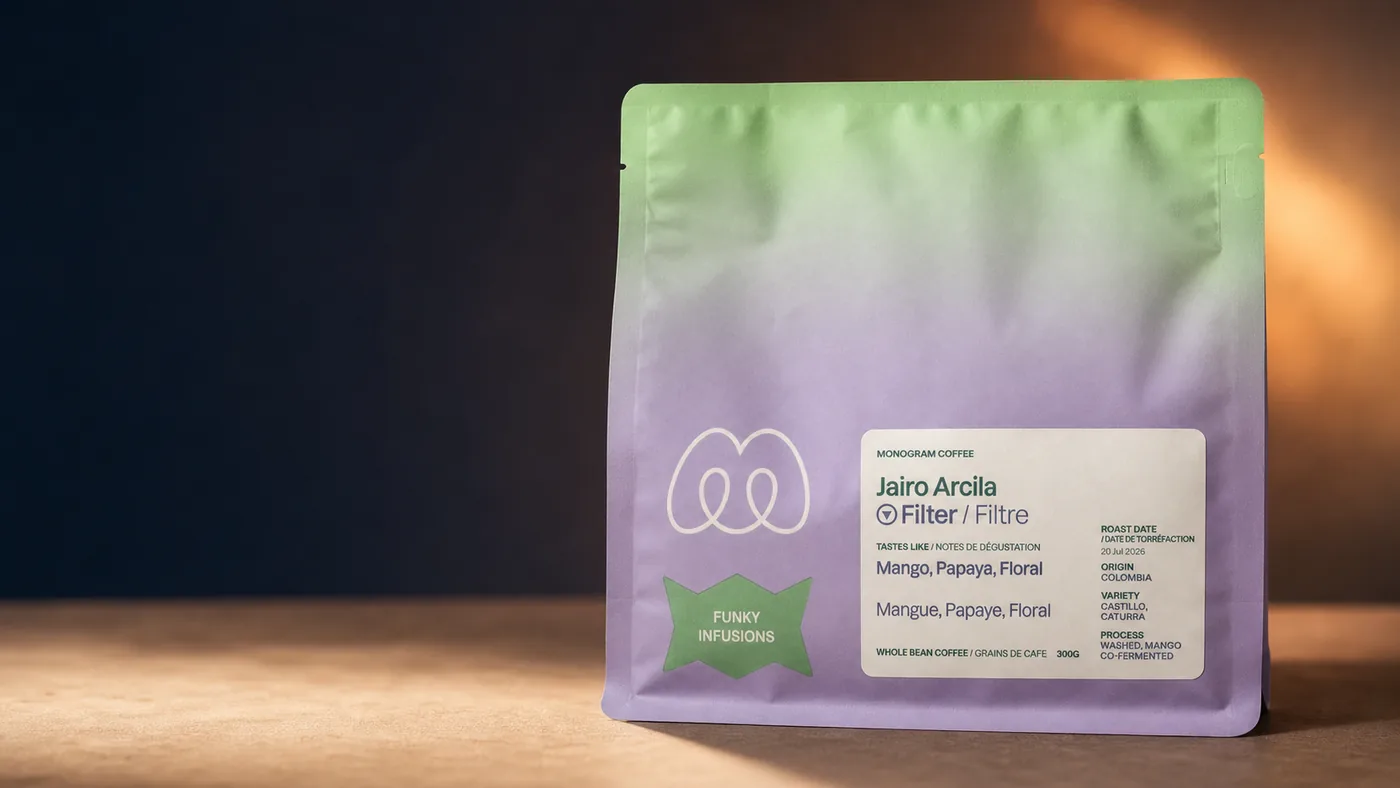
monogram-jairo-arcila.webp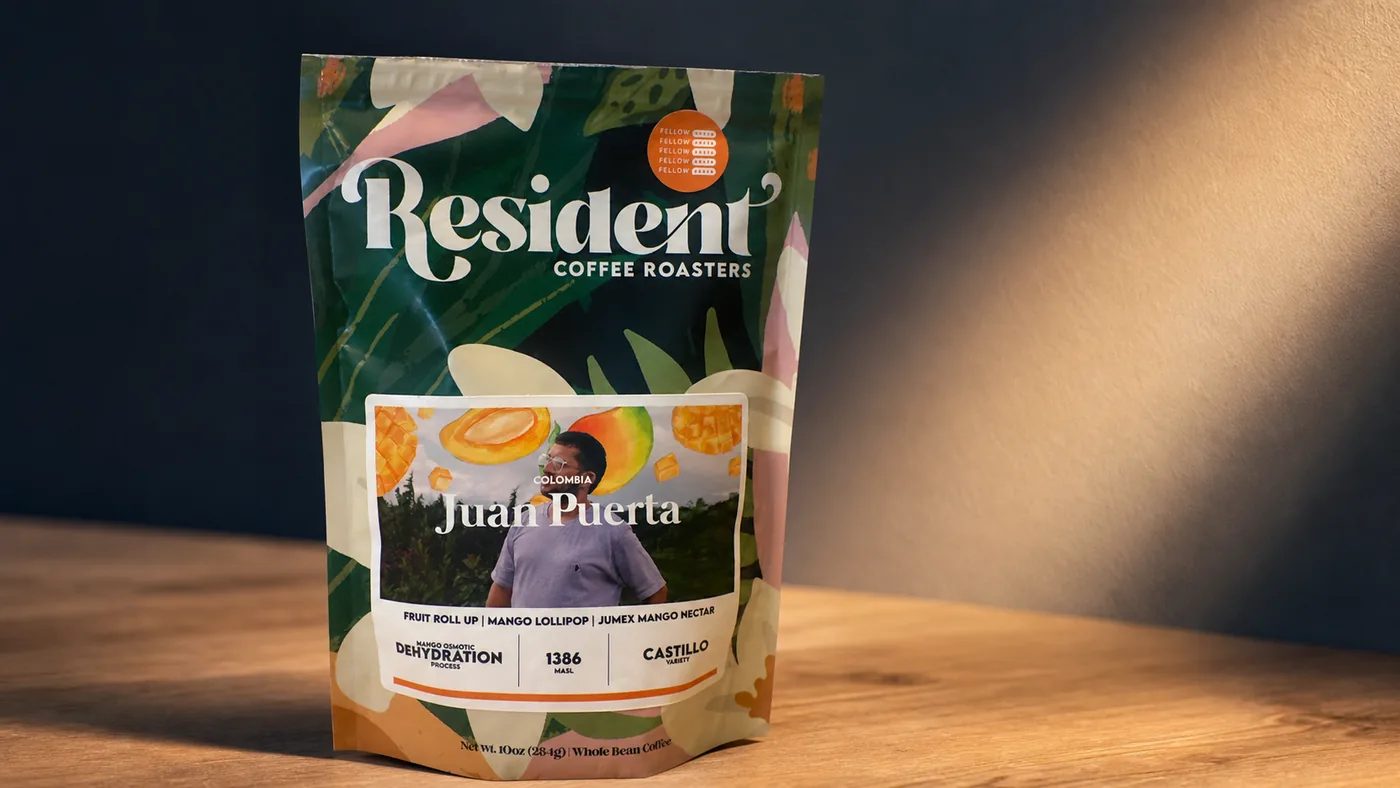
resident-juan-puerta.webpMonogram's Jairo Arcila comes from his Villarazo farm at 1,420 masl in the Quindío region. Jairo has built a reputation for experimenting with anaerobic fermentation methods that push flavor in new directions while remaining deeply rooted in meticulous cultivation and processing. This washed Castillo and Caturra lot is co-fermented with mango, using wine yeast to initiate a cascade of metabolic reactions. It was difficult to describe the unique expansiveness of its flavor and even harder to imagine what I would do when the bag ran out.
Resident's Juan Puerta is a Castillo grown at 1,386 masl on La Sirena farm near Armenia, also in the Quindío region. It arrived as this week's Fellow Drops selection, almost perfectly timed with my dwindling supply of Jairo Arcila. Its mango osmotic dehydration process produces some of the most creative tasting notes I've seen claimed, and the coffee did not disappoint.
Different global roasters. Different approaches to processing. Two distinct stories on my shelf. One shared origin doing something quietly extraordinary with this special fruit.
Then the news began pouring in from western Colombia, and each coffee took on a different kind of weight. When I saw where Quindío sat in relation to the earthquake's reported impact area, my jaw dropped. Their origin was no longer just a line on a label. I felt compelled to better understand the place from which I had been drawing so much joy.
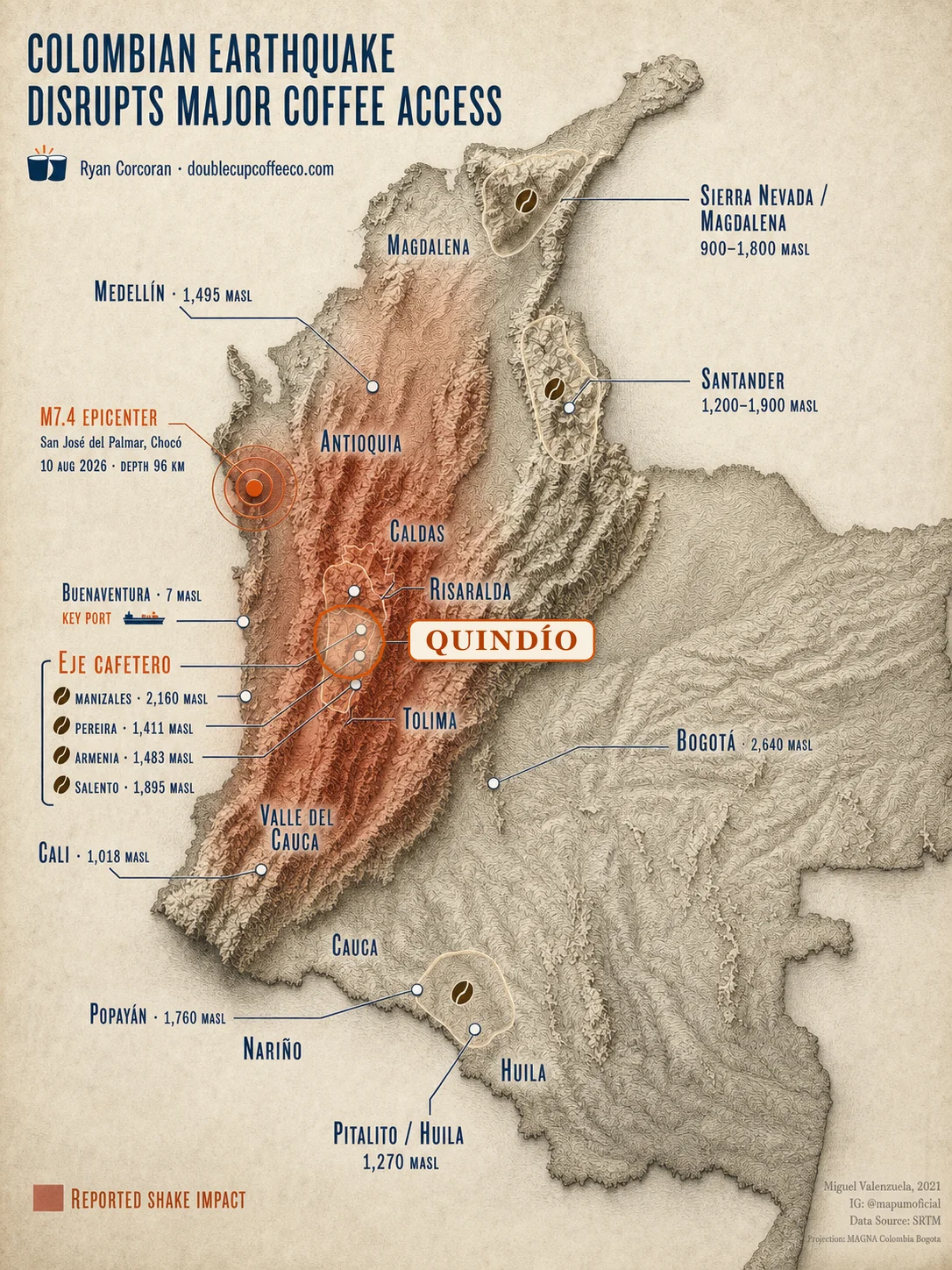
colombia-quake-map.webpOn August 10, 2026, a magnitude 7.4 earthquake struck near San José del Palmar, Chocó, in western Colombia. The earthquake occurred at a depth of 96 kilometers near the country's Pacific side.
Its location placed two important points in the coffee journey within the reported shaking corridor: the high-elevation producers of the Eje Cafetero, including Quindío, and the sea-level port of Buenaventura, Colombia's key Pacific gateway to the world.
Coffee-growing communities and the routes their coffee travels to reach us were disrupted by a single deadly disaster.
When access is disrupted at both the farm and the port, the effects can last far beyond a single harvest. They move through the lives of producers, pickers, mill workers, drivers, warehouse teams, and port crews. Most of their names will never appear on the bag, but every cup depends on their work.
These two coffees are still extraordinary. Now, though, drinking them also means thinking about the place and the people behind them. It means recognizing how many hands carried that coffee forward and how fragile the route from origin to cup can be.
To ColombiaThose of us who love specialty coffee from this region are sending healing energy to the producers, the families, and everyone along the road from the mountains to the sea…
A Double Cup reminderOne cup is rarely just one cup. When you share it with someone who could simply use a cup, you make room for both your story and theirs.